
Sudoku Puzzle Challenges That Sharpen Logic and Focus Daily
Discover the World of Sudoku
Sudoku is one of the most popular puzzle games in the world. Millions of people enjoy Sudoku every day because it combines entertainment, concentration, and logical thinking. Unlike many number-based activities, Sudoku does not require advanced mathematics. Success comes from observation, reasoning, and patience rather than calculations.
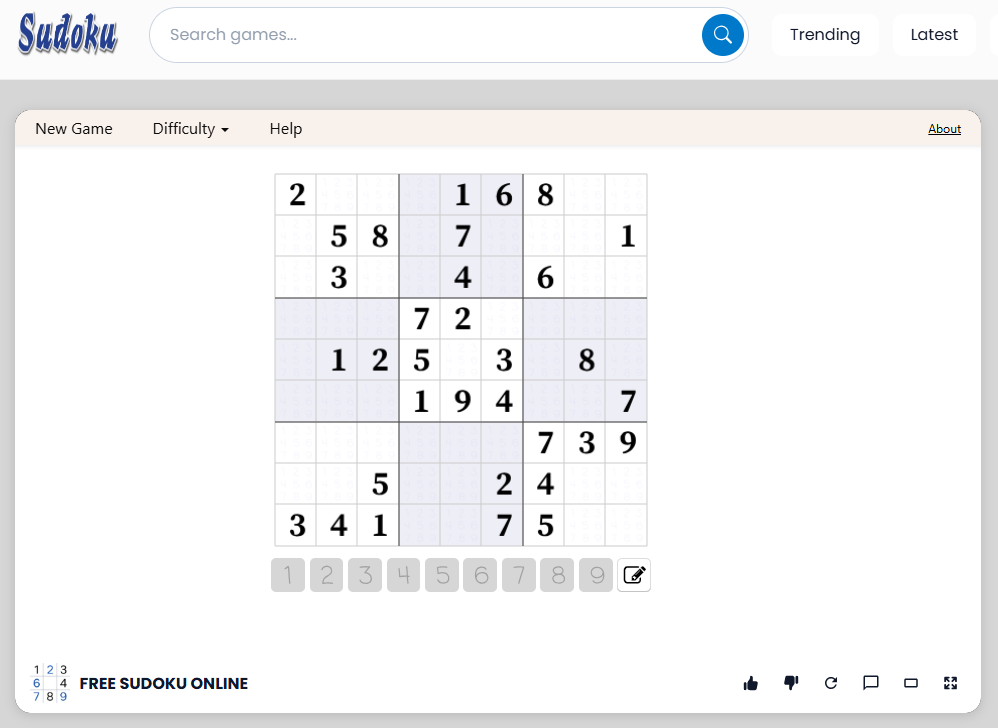
A standard Sudoku puzzle consists of a 9x9 grid divided into nine smaller 3x3 sections. Some numbers are already placed in the grid, and the objective is to fill the remaining spaces. Each row, column, and 3x3 section must contain the numbers 1 through 9 exactly once.
The simple rules make Sudoku easy to learn, while increasing difficulty levels create a challenge for beginners and experts alike. This balance has helped Sudoku become a favorite puzzle across different age groups and cultures.
Why Sudoku Remains Popular Around the Globe
Easy Rules and Endless Variety
One reason for the lasting popularity of Sudoku is accessibility. New players can understand the rules within minutes, yet mastering advanced puzzles can take years of practice.
Every Sudoku puzzle presents a unique arrangement of numbers. This variety ensures that players always encounter fresh challenges. Whether solving a quick puzzle during a coffee break or tackling an expert-level grid, Sudoku offers a rewarding experience.
Suitable for All Ages
Sudoku appeals to children, teenagers, adults, and seniors. Younger players develop problem-solving skills, while adults often use Sudoku as a mental workout. Many older adults enjoy Sudoku because it encourages concentration and cognitive engagement.
The universal nature of Sudoku allows people from different backgrounds to enjoy the same activity regardless of language or cultural differences.
Understanding Sudoku Rules and Structure
The Basic Grid Layout
A traditional Sudoku puzzle contains 81 cells arranged in nine rows and nine columns. The grid is further divided into nine smaller boxes.
The goal is straightforward:
Each row must contain the numbers 1 to 9.
Each column must contain the numbers 1 to 9.
Each 3x3 box must contain the numbers 1 to 9.
No number can appear more than once in any row, column, or box.
How a Puzzle Begins
At the start of a Sudoku game, some cells already contain numbers. These numbers act as clues that guide the solving process.
The challenge lies in determining the correct placement of all remaining numbers while following the puzzle rules. Every completed Sudoku puzzle has a single valid solution when designed correctly.
Benefits of Playing Sudoku Regularly
Improved Logical Thinking
Sudoku encourages analytical reasoning. Players evaluate available information, eliminate impossible options, and identify logical patterns.
Repeated practice strengthens problem-solving abilities that can be useful in many daily situations. Rather than relying on guesses, Sudoku rewards careful observation and structured thinking.
Better Concentration
Solving a Sudoku puzzle requires attention to detail. Even a small mistake can affect the entire grid.
This focus helps train the mind to maintain concentration for longer periods. Many people enjoy Sudoku as a way to disconnect from distractions and engage in a meaningful mental activity.
Mental Exercise and Cognitive Engagement
Just as physical exercise supports the body, mental exercise supports the brain. Sudoku challenges memory, pattern recognition, and reasoning skills.
Regular puzzle solving can become part of a healthy routine that keeps the mind active and engaged.
Effective Strategies for Solving Sudoku
Start With Obvious Numbers
Beginners should begin by identifying rows, columns, or boxes that already contain many numbers. Fewer empty spaces make it easier to determine the correct value for a cell.
This method creates momentum and often reveals additional opportunities throughout the grid.
Use Elimination Techniques
Elimination is one of the most important Sudoku strategies. Players examine which numbers already appear in a row, column, or box and remove those possibilities from consideration.
Eventually, only one valid number remains for a specific cell.
Look for Patterns
As experience grows, players begin recognizing common Sudoku patterns. Certain arrangements reveal hidden opportunities that may not be immediately obvious.
Pattern recognition helps solve difficult puzzles more efficiently and reduces unnecessary trial and error.
Different Sudoku Difficulty Levels
Beginner Sudoku
Beginner puzzles contain many starting clues. These puzzles introduce basic concepts and help new players become familiar with Sudoku rules.
Most solutions can be found using straightforward logic without advanced techniques.
Intermediate Sudoku
Intermediate puzzles contain fewer clues and require deeper analysis. Players often need to combine multiple strategies to make progress.
These puzzles provide a balanced challenge that strengthens problem-solving skills.
Expert Sudoku
Expert Sudoku puzzles demand patience and advanced reasoning. Clues are limited, and progress may occur slowly.
Many experienced players enjoy expert-level Sudoku because of the satisfaction that comes from solving a highly challenging grid.
Popular Sudoku Variations
Mini Sudoku
Mini Sudoku uses smaller grids while maintaining similar rules. These puzzles are ideal for quick sessions and beginners who want a simpler experience.
Killer Sudoku
Killer Sudoku combines traditional Sudoku with additional numerical constraints. Groups of cells must add up to specific totals, creating a unique challenge.
Samurai Sudoku
Samurai Sudoku features multiple overlapping grids connected together. Solving these puzzles requires strategic thinking across several sections at the same time.
Hyper Sudoku
Hyper Sudoku introduces extra regions that must also contain the numbers 1 through 9. This variation increases complexity and encourages new solving approaches.
Digital Sudoku and Mobile Gaming
Technology has made Sudoku more accessible than ever before. Mobile applications, websites, and online platforms provide unlimited puzzles for players around the world.
Digital Sudoku offers several advantages. Automatic error checking, difficulty selection, progress tracking, and daily challenges enhance the overall experience. Many applications also provide hints and tutorials that help players improve their skills.
Online communities allow Sudoku enthusiasts to discuss strategies, share achievements, and participate in competitions. This social aspect adds another layer of enjoyment to the puzzle-solving experience.
Tips for Becoming a Better Sudoku Player
Practice Consistently
Regular practice helps improve speed and accuracy. Even a few minutes each day can strengthen Sudoku skills over time.
Avoid Random Guessing
Successful Sudoku solving relies on logic. Random guesses often create confusion and lead to mistakes later in the puzzle.
Learn Advanced Techniques
As confidence grows, players can explore advanced methods such as candidate analysis, hidden pairs, and pattern-based strategies. These techniques help solve more challenging puzzles efficiently.
Conclusion
Sudoku continues to captivate puzzle enthusiasts because it combines simplicity with intellectual challenge. The clear rules make Sudoku accessible to beginners, while complex puzzles provide endless opportunities for growth and improvement. From enhancing concentration and logical thinking to offering enjoyable daily entertainment, Sudoku remains one of the most rewarding puzzle games available today. Whether played on paper or through a digital platform, Sudoku delivers a satisfying experience that keeps minds active and engaged.